


Determining exactly when do you apply vitamin C serum is a cornerstone of an effective skincare regimen, as the timing of your product application can significantly influence how well your skin absorbs the active ingredients. As a potent antioxidant, vitamin C is designed to defend your complexion against environmental stressors, making its placement in your daily routine a strategic decision.
While many users are tempted to apply it whenever it feels convenient, dermatological advice consistently points toward specific windows of time to maximize its efficacy. By understanding how this powerhouse ingredient interacts with other products, you can ensure that your skin receives the full benefits of collagen synthesis and protection against free radicals without risking irritation or product incompatibility.
The Optimal Timing for Vitamin C Application

Most experts agree that the ideal time to incorporate vitamin C into your daily regimen is during your morning skincare routine. Because vitamin C acts as a vital shield against environmental aggressors, applying it before you step out into the world provides a layer of antioxidant protection that lasts throughout the day. When you apply it in the morning, you are essentially neutralizing the oxidative stress caused by pollution and UV damage before it has a chance to penetrate the skin barrier and cause long-term harm.
The primary reason for this morning focus is the synergy between vitamin C and your sunscreen. While vitamin C is not a sunscreen itself, it works in tandem with SPF to mitigate the damage caused by UV rays that might bypass your primary sun protection.
Think of it as a secondary line of defense; while your sunscreen reflects or absorbs UV light, the vitamin C works internally to quench the free radicals that are generated by sun exposure. By applying it after cleansing but before your moisturizer, you allow the serum to penetrate the skin directly, setting the stage for a brighter, more resilient complexion that is better equipped to handle the stresses of the day.
Understanding the Correct Serum Application Order
The sequence of your skincare products is arguably just as important as the products themselves. The general rule of thumb in dermatology is to apply products from the thinnest consistency to the thickest.
Since most vitamin C formulations are water-based or lightweight serums, they should generally be applied after your cleanser and toner but before heavier creams, lotions, or oils. If you use a very thin, watery toner, apply that first; once it has absorbed, you can move on to your vitamin C.
If you are using other active serums, such as a hyaluronic acid serum, the order can become slightly more nuanced. Generally, you want to apply the product with the lowest pH first. Since L-ascorbic acid, the most common and effective form of topical vitamin C, requires a low pH to be stable and absorbable, it is often best to apply it directly to clean, dry skin.
Applying it after your toner helps adjust the pH of your skin to the ideal range for the vitamin C to work effectively. Following this order ensures that the active ingredients are not blocked by occlusive layers like thick moisturizers or face oils, which could prevent the serum from penetrating the epidermis.
Synergy and Conflicts with Other Active Ingredients
One of the biggest concerns for skincare enthusiasts is how to layer vitamin C with other popular actives like niacinamide, retinol, and chemical exfoliation. There is a long-standing debate regarding whether you can use vitamin C and niacinamide together.
While older studies suggested that these two ingredients might counteract each other or cause redness due to pH differences, modern formulations are much more stable. If you are using high-quality, modern products, you can typically use them in the same routine, though waiting a few minutes between applications is a wise practice to allow for absorption.
Retinol, on the other hand, is almost exclusively recommended for your evening routine. Because both vitamin C and retinol are potent, they can be highly irritating if applied simultaneously. Retinol is also light-sensitive, which is why it is strictly a nighttime ingredient.
Conversely, chemical exfoliants like AHAs (alpha hydroxy acids) or BHAs (beta hydroxy acids) can lower the skin’s pH and potentially lead to irritation if layered directly with L-ascorbic acid. It is often best to alternate these actives—using your vitamin C in the morning and your chemical exfoliants or retinoids in the evening—to prevent over-exfoliation and maintain the integrity of your skin barrier.
| Ingredient | Best Time to Use | Compatibility with Vitamin C |
|---|---|---|
| Niacinamide | Morning or Night | Compatible (wait 5-10 mins) |
| Retinol | Night Only | Avoid layering (use separately) |
| Hyaluronic Acid | Morning and Night | Highly Compatible |
| Chemical Exfoliants | Night Only | Avoid layering (use separately) |
Why Morning Application Enhances UV Protection
The relationship between vitamin C and sun protection is a critical aspect of modern dermatology. Exposure to UV rays is the primary driver of photoaging, which includes the development of fine lines, wrinkles, and hyperpigmentation. By applying vitamin C in the morning, you are essentially pre-loading your skin with antioxidants.
These antioxidants work to donate electrons to free radicals, which are unstable molecules generated by UV radiation and pollution. By neutralizing these free radicals, vitamin C prevents them from damaging your cellular DNA and collagen fibers.
It is important to emphasize that vitamin C does not replace your sunscreen. Instead, it acts as a force multiplier. When you apply your sunscreen over the top of your vitamin C serum, you create a dual-action defense system.
The sunscreen blocks the UV rays, while the vitamin C handles any oxidative stress that manages to get through. This combination is particularly effective for those dealing with existing sun damage or those looking to prevent further signs of aging. Consistency is key here; applying the serum daily in the morning ensures that your skin’s antioxidant reservoirs remain stocked throughout the day.
The Importance of Proper Storage and Oxidation
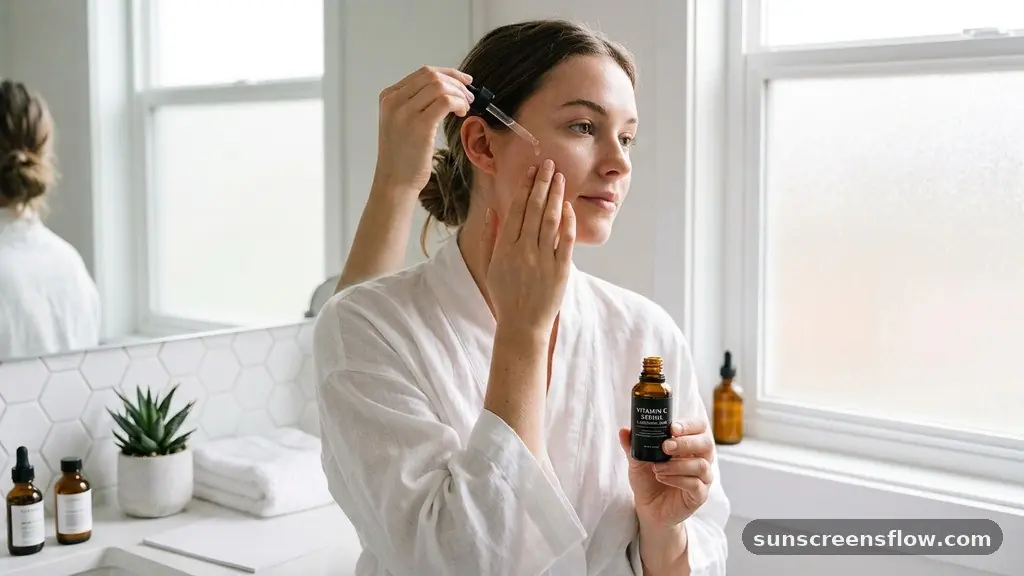
Even if you know when to apply your vitamin C, the effectiveness of the product depends entirely on its stability. Vitamin C, particularly in the form of L-ascorbic acid, is notoriously unstable. It is highly sensitive to light, heat, and air, which trigger a process called oxidation.
When a product oxidizes, it loses its potency and can even become harmful to the skin, potentially causing irritation or staining. You can tell if your serum has oxidized if it has turned from a clear or light straw color to a dark orange or brown hue.
To protect your investment, always ensure your product is housed in an amber glass bottle or an airless pump. These containers are specifically designed to minimize exposure to light and oxygen. Avoid storing your skincare in the bathroom, where humidity and temperature fluctuations can accelerate the breakdown of the active ingredients.
A cool, dark drawer or a dedicated skincare fridge is an ideal environment. Always tighten the cap immediately after each use. If you notice a significant change in color or an off-putting scent, it is time to discard the product, as its efficacy has likely been compromised.
Addressing Skin Sensitivity and Patch Testing
Because vitamin C is a potent active ingredient, it can sometimes cause tingling or mild irritation, especially when you first start using it. This is particularly true for those with sensitive skin or those using high concentrations of L-ascorbic acid.
If you are wondering when to apply vitamin C serum when you have a reactive complexion, the answer is to start slowly. You do not need to apply it twice a day or in high concentrations to see results.
Before applying it all over your face, perform a patch test on your inner arm or behind your ear. Wait 24 hours to see if any redness or itching occurs. If your skin reacts well, you can begin by applying the serum every other morning.
Once your skin builds a tolerance, you can move to daily application. If you find that the standard L-ascorbic acid is too harsh, you might consider derivatives like sodium ascorbyl phosphate or magnesium ascorbyl phosphate, which are generally more stable and less irritating, though they may require a slightly higher concentration to achieve the same results.
- Cleanse your face thoroughly to remove dirt and oils.
- Apply a hydrating toner to balance the skin’s pH levels.
- Dispense a few drops of vitamin C serum onto your fingertips.
- Gently press the serum into your skin rather than rubbing it vigorously.
- Allow the product to absorb for at least 3 to 5 minutes.
- Follow with a moisturizer to seal in the hydration.
- Apply a broad-spectrum sunscreen as the final step of your morning routine.
Maximizing Collagen Synthesis and Skin Brightening
Beyond its protective qualities, vitamin C is a vital cofactor in collagen synthesis. Collagen is the structural protein that keeps skin firm and plump, but its production naturally declines as we age.
By providing your skin with a consistent supply of topical vitamin C, you encourage the fibroblasts in your dermis to produce more collagen, which can lead to improved skin texture and elasticity over time. This is a long-term benefit, meaning that the timing of your application—specifically, the consistency of your morning routine—plays a massive role in your skin’s health over the years.
Furthermore, vitamin C is a powerhouse when it comes to inhibiting tyrosinase, the enzyme responsible for melanin production. This makes it an excellent tool for fading hyperpigmentation, dark spots, and acne scars.
While you might be tempted to use it only on spots, applying it to your entire face ensures an even, radiant complexion. Because it promotes cell turnover and protects against the damage that causes dark spots in the first place, it is an essential ingredient for anyone looking to achieve a brighter, more even skin tone.
Topical Vitamin C and the Skin Barrier
The health of your skin barrier is paramount when using any active ingredient. A compromised barrier can lead to increased sensitivity, redness, and dehydration. When you apply vitamin C, you are introducing an acidic substance to your skin.
If your barrier is already damaged, this can cause a stinging sensation. If you find your skin feels tight or irritated after application, it is a sign that you should scale back your use of other actives and focus on barrier repair.
Ingredients like hyaluronic acid and ceramides are excellent to use alongside vitamin C. Hyaluronic acid helps to pull moisture into the skin, which can counteract the potentially drying nature of some L-ascorbic acid formulations. Ceramides help to reinforce the lipid barrier, keeping the skin resilient.
If you are unsure about your barrier health, consult with a dermatologist. They can provide personalized advice on whether your skin is ready for a high-potency vitamin C serum or if you should focus on soothing ingredients first.
Answering Common Topical Gaps
A common question that often goes unaddressed is whether you can apply vitamin C serum to damp skin. While applying hyaluronic acid on damp skin is recommended to lock in moisture, doing so with L-ascorbic acid can actually increase the risk of irritation.
The water can cause the vitamin C to penetrate too quickly, leading to a stinging sensation. It is generally safer to apply your vitamin C serum to completely dry skin, especially if you are prone to sensitivity.
Another gap in common knowledge relates to the “tingling” sensation. Many users assume that if a product tingles, it is working. However, in the case of vitamin C, a slight tingle is common, but a burning sensation or persistent redness is not.
If you experience burning, wash the product off immediately with cool water and skip the application the next day. It is also worth noting that the concentration matters; a 10% to 15% concentration is often just as effective as a 20% concentration, with a lower likelihood of causing adverse reactions.
Frequently Asked Questions
Can I use vitamin C serum every day?
Yes, using vitamin C serum every day is generally recommended to maintain high levels of antioxidant protection in the skin. However, if you have sensitive skin, you may want to start by using it every other day to allow your skin to build tolerance before moving to daily use.
Should I apply vitamin C before or after moisturizer?
You should always apply your vitamin C serum before your moisturizer. Serums are formulated with smaller molecules designed to penetrate deeply into the skin, whereas moisturizers are thicker and designed to lock in moisture and create a protective barrier on the skin’s surface.
Can I leave vitamin C serum on my face overnight?
While you can technically leave vitamin C on your face overnight, it is most effective when used in the morning. Since its primary function is to protect against daytime environmental stressors like UV rays and pollution, the morning is the most strategic time to apply it for maximum benefit.
What happens if I combine vitamin C with retinol?
Combining vitamin C and retinol in the same routine can lead to significant skin irritation, redness, and peeling. It is widely recommended to use vitamin C in the morning for protection and save your retinol for your evening routine to allow your skin to recover during the night.
Conclusion
Mastering when do you apply vitamin C serum is a simple yet transformative step in your skincare journey. By prioritizing morning application, you leverage the antioxidant properties of the serum to defend your skin against the daily onslaught of UV damage and environmental pollution. Remember to follow the sequence of thinnest to thickest, store your product in a cool, dark place to prevent oxidation, and listen to your skin’s unique needs regarding concentration and frequency.
When paired with a reliable sunscreen and a healthy moisturizing routine, vitamin C becomes one of the most effective tools in your arsenal for achieving a radiant, firm, and protected complexion. Stay consistent, choose high-quality formulations, and enjoy the long-term benefits of a well-timed antioxidant regimen.


